ISO 13485
ISO 13485
All-Plastics focuses on zero defects by providing premier precision injection molding for high liability componentry. By utilizing scientific decoupled molding techniques, documented process controls and automation, we are able to provide high quality products at a low cost.
Our facilities house a wide range of best in class injection molding equipment, including molding presses with tonnage ranging from 14 to 1,000, servo robotics, automation, box loaders, full service quality lab and full service tool room.
Increasing productivity, repeatability and employee safety are just a few reasons to consider us as your partner to provide automation and fool proof systems.
We have a wide range of capabilities and solutions for every project:
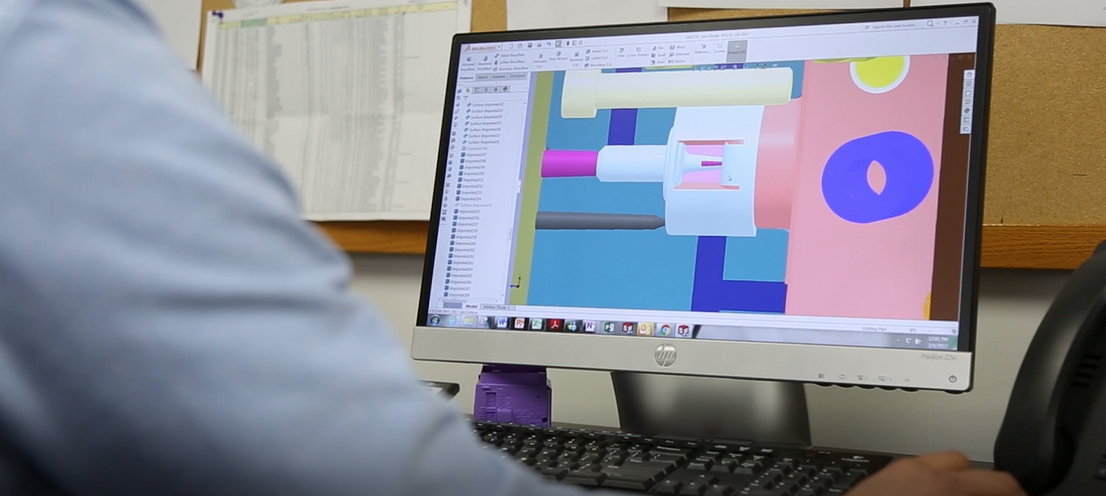
Our experts optimize mold designs prior to manufacturing to eliminate trial and error. This provides accuracy in validating before production (product/ design/ process) and helps you get your products to market faster!
Our tool room supports mold building, engineering changes, repairs and preventative maintenance. We have mold building capabilities internally and through alliance partners in the U.S. and Asia.
Our Advantages and Benefits Request a Quote
Other precise and consistent production solutions that increase quality, security and
provide cost advantages are:
IQMS is used for real-time statistics, IQ Quality, Statistical Process Control
and Customer Relationship Management.
It also allows us to provide our customers with remote access to real-time production
statistics and quality assurance for their projects.
Automatically generated real-time IQ reports are distributed to customers,
per their request, on a weekly or monthly basis.
Advanced shipping notices and real time inventory scanners
are used to provide 100% on-time delivery.
Our focus is high quality, low cost, on-time delivery!
Other methodology & best practices include:

Design:Our expert team of engineers will help create your custom mold using advanced 3D CAD Software, mold flow analysis simulation, and rapid prototyping.

Clamping:Two halves of the designed mold are clamped together to create a single mold. The clamping unit uses enough force to securely hold the two molds together. The mold is then connected to the injection molding machine.

Injection/Filling:The raw plastic material is then poured into the mouth/hopper of the injection molding machine. The raw material is then melted by heat and pressure and is commonly referred to as the “shot”. The shot is then used to fill in the mold.

Dwelling:Pressure is then applied to the molten plastic material to ensure all cavities are filled. The extreme amounts of pressure help keep the molten plastic material compacted tightly.

Cooling:The plastic then cools as it begins making contact with the interior surfaces. The cooling stage accounts for shrinkage as the plastic solidifies. More shot is injected to account for shrinkage. Cool down time is variable by thermodynamic properties of the plastic used to inject.

Ejection:The mold is then removed by the ejection system on the injection molding machine. Rods, plates, air blasts, or mold release agents are used to help remove the plastic part from the mold. The time elapsed from clamping the mold to ejecting the end product is considered the full cycle of injection molding.
Injection molding is one of the most widely used manufacturing processes, capable of producing intricate plastic parts with high precision. However, like any industrial process, it has its challenges, and…

If your smartphone has a clear, durable casing, it's likely made of polycarbonate. This thermoplastic polymer is a popular material among plastic parts, components, and products manufacturers. Its qualities, such…
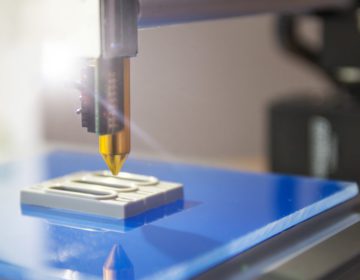
Injection molding is an efficient manufacturing process for producing various plastic parts and products. It is widely utilized across various industries due to its versatile, repeatable, and precise advantages. …